

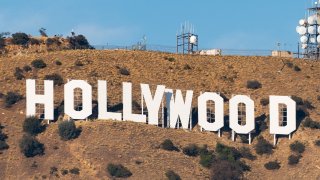
General view of the Hollywood Sign on November 17, 2020 in Hollywood, California.
Nearly 40 film projects will be shot and produced in the state of California as they were rewarded tax credits through the Film and Television Tax Credit Program, the office of Gov. Gavin Newsom announced Thursday.
The movies range from small, independent films with the budget of under $10 million to bigger productions, including Disney's animated "Phineas and Ferb,'' the Will Ferrell-produced film "Self Help,'' the Laverne Cox-starring film "Black is Blue'' and an upcoming animated feature from DreamWorks.
Stream Los Angeles News for free, 24/7, wherever you are.
 WATCH HERE
The projects will collectively generate nearly $800 million for the state and local economy, Newsom's office said.
"California remains the entertainment capital of the world -- and we're making sure it stays that way,'' Newsom said in a statement. "Our expanded film and television tax credit is keeping more productions here in
the Golden State, creating good-paying jobs and supporting communities statewide."
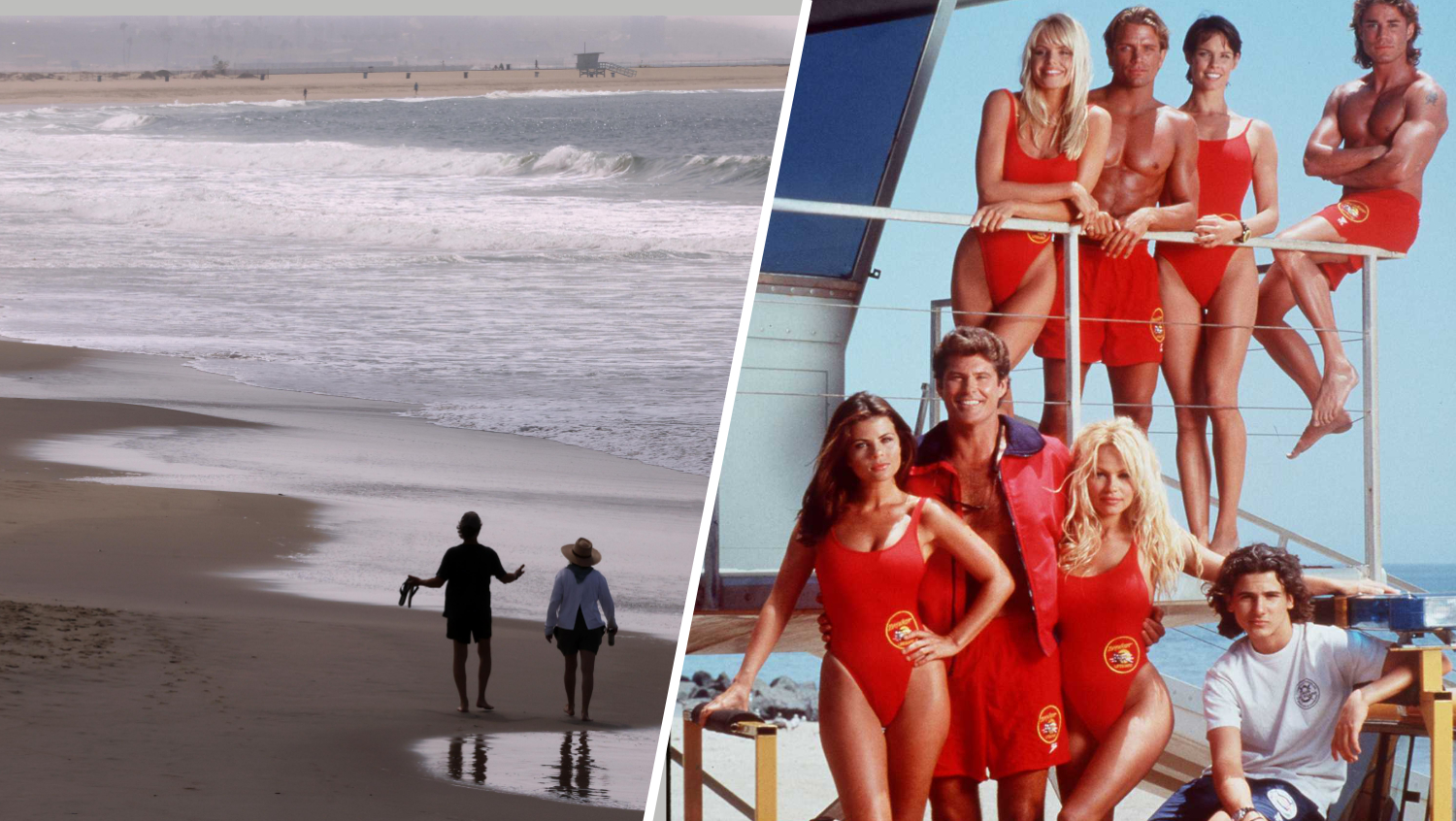
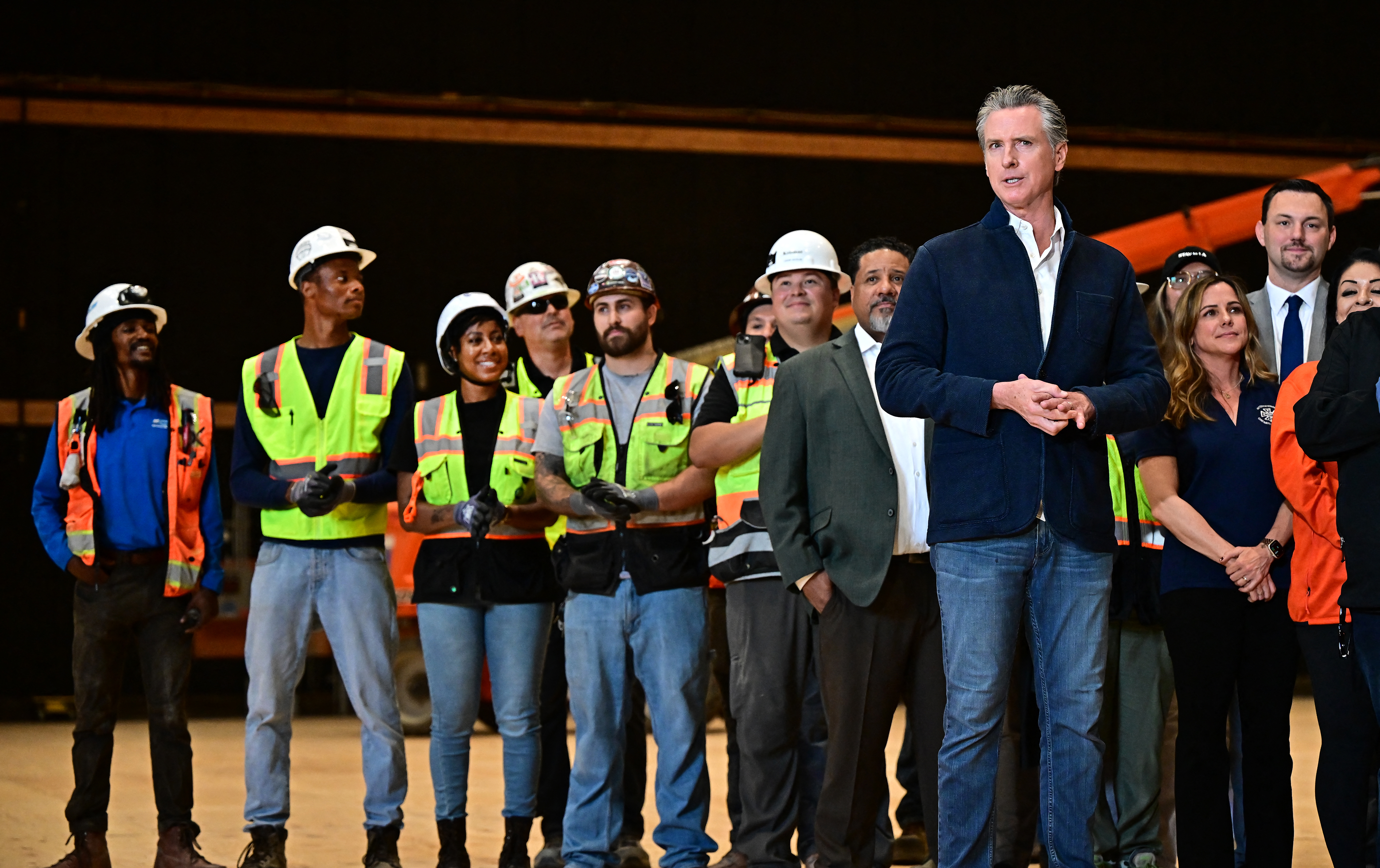
The latest batch of film projects will be shot during over 460 filming days outside the traditional 30-mile Hollywood studio zone.
Since the state's tax credit program was expanded last year in a further effort to curb runaway production, the California Film Commission has approved credits for 147 productions, up 53% from the same period a year ago.
According to Newsom's office, those productions represent $5.5 billion in total economic activity, including 21,504 cast and crew jobs.
The expansion of the program increased the tax credits from $330 million to $750 million.
"This round marks a truly exciting milestone for our program,'' California Film Commission Director Colleen Bell said in a statement. "For the first time, we're welcoming animated feature films from powerhouses DreamWorks Animation, 20th Century Studios and Disney Television Animation, alongside a strong slate of big budget features and independent productions, that bring fresh voices and original storytelling to the screen.
"With more than 45% of filming days taking place outside the traditional studio zone, we're seeing the real-world economic impact of this program reach communities across the entire state. That's what this program is about: creating good-paying jobs and supporting local businesses, while bolstering California's creative economy in regions across the state.''